










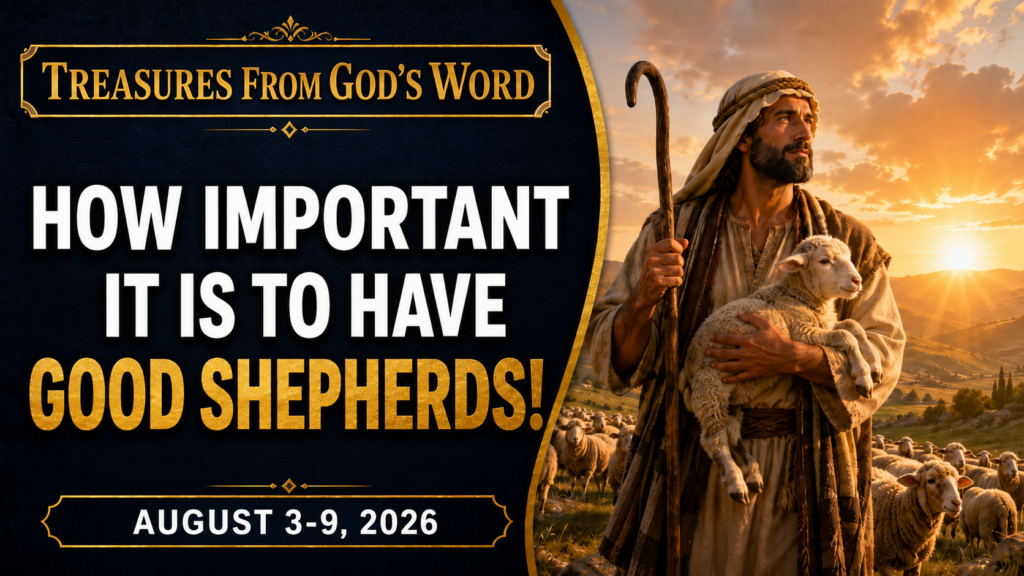
Theme: How important it is to have good shepherds!
Imagine a flock in a dangerous area. Some sheep are weak, others are injured, and some have wandered off. If the shepherd is attentive, he searches for them, heals them and protects them. But if he thinks only of himself, the flock is left exposed and ends up being scattered.
The Bible uses this comparison to speak about those who have the responsibility of caring for God’s people. In Jeremiah’s day, many shepherds and prophets of Judah failed badly. Instead of protecting the sheep, they harmed them. Their bad example helps us to value even more the care that Jehovah provides today through Jesus Christ and through Christian overseers who strive to imitate him.
First, let us see how the shepherds of Judah neglected God’s people.
Jeremiah 23:2
“Therefore this is what Jehovah the God of Israel says against the shepherds who are shepherding my people: ‘You have scattered my sheep; you kept dispersing them, and you did not care for them.’ ‘So I will punish you for your evil deeds,’ declares Jehovah.”
Jehovah called the Israelites “my sheep.” They did not belong to the kings, the priests or the prophets. They belonged to Jehovah. That is why those who had the responsibility of caring for them had to treat them with tenderness and respect.
However, those shepherds had scattered and dispersed the people. Instead of drawing them closer to Jehovah, their conduct and their decisions drove them away from him. Ezekiel described in greater detail what they were doing.
Ezekiel 34:2-5
“Son of man, prophesy against the shepherds of Israel. Prophesy and say to the shepherds: ‘This is what the Sovereign Lord Jehovah says: “Woe to the shepherds of Israel, who have been feeding themselves! Is it not the flock that the shepherds should feed? You eat the fat, you clothe yourselves with the wool, and you slaughter the fattest animal, but you do not feed the flock. You have not strengthened the weak sheep or healed the sick one or bandaged the injured one or brought back the straying one or looked for the lost one; instead, you have dominated them with harshness and tyranny. So they were scattered because there was no shepherd; they were scattered and became food for all the wild animals of the field.”‘”
The picture is clear. Those men profited from the flock but did not care for it. The weak, sick and injured sheep were abandoned. Neither did they look for the ones that got lost or help the straying ones to return. On the contrary, they dominated with harshness and tyranny.
This teaches us that a good shepherd does more than simply lead. He takes an interest in each sheep. He notices the one who is weak, the one who feels alone and the one who may have drifted away. Jehovah expects those who care for his people to reflect his compassion.
The second point shows that by their words and their bad example, the false prophets encouraged the people to do bad things.
Jeremiah 23:14, 15
“And I have seen horrible things in the prophets of Jerusalem. They commit adultery and live a lie; they support evildoers and do not repent of their wickedness. To me they are all like Sodom, and her inhabitants are like Gomorrah.” “Therefore this is what Jehovah of armies says against the prophets: ‘I am going to make them eat wormwood and give them poisoned water to drink. For from the prophets of Jerusalem apostasy has spread throughout the land.'”
The prophets should have taught the truth and helped the people to stay close to Jehovah. But they themselves committed adultery, lived a lie and supported evildoers. Instead of correcting wrong conduct, they justified it.
The effect of their example was devastating. If those who supposedly represented Jehovah practiced what was bad without repenting, many people could think that their own conduct was not so serious. In this way apostasy spread throughout the land.
The history of Israel and Judah shows how dangerous it is to follow spiritual guides who do not respect God’s Word. The people ended up listening to priests and prophets who used smooth words and false messages. Those men did not help the nation to return to Jehovah, “the source of living water.” They led it into immorality and finally into destruction.
Something similar happens when a religious leader lowers Bible standards in order to please people. He may seem tolerant, but he leaves people without spiritual protection. A good shepherd does not change the truth in order to avoid discomfort. He teaches clearly but kindly, and he helps others to understand that Jehovah’s standards protect us.
This brings us to the third point: Christian overseers shepherd God’s flock with dedication and strive to be good examples.
1 Peter 5:2, 3
“Shepherd the flock of God under your care, serving as overseers, not under compulsion, but willingly before God; not for love of dishonest gain, but eagerly; not lording it over those who are God’s inheritance, but becoming examples to the flock.”
This counsel establishes a very clear contrast with the unfaithful shepherds of Judah. Christian elders know that the flock belongs to God. They are not the owners of the brothers.
That is why they serve willingly and eagerly, not for prestige or for gain. Neither do they act as masters or impose their preferences. They use the Bible to give direction, they listen patiently and they try to understand each brother’s situation.
And something very important: they become examples to the flock. If they encourage the brothers to preach, they themselves share enthusiastically. If they speak about the importance of the meetings, they make an effort to be present. If they teach humility, they demonstrate it by accepting suggestions and acknowledging their limitations.
Of course, elders are imperfect. But when they imitate the Chief Shepherd, Jesus Christ, they can be a real source of encouragement and protection. We cooperate with them when we speak to them with confidence, accept Bible-based counsel and pray for them.
The research section asks: “How does the fulfillment of Jeremiah 23:5, 6 benefit God’s people?”
Jeremiah 23:5, 6
“‘Look! The days are coming,’ declares Jehovah, ‘when I will raise up for David a righteous sprout. And a king will reign and show insight and uphold justice and righteousness in the land. In his days Judah will be saved, and Israel will dwell in security. And this is the name by which he will be called: Jehovah Is Our Righteousness.'”
This “righteous sprout” is Jesus Christ, the King whom Jehovah raised up from the line of David. Unlike the bad shepherds of Judah, Jesus rules with insight, justice and righteousness.
How does this benefit God’s people? First, Jesus protects the sheep spiritually and feeds them by means of God’s Word. Second, under his direction the congregation enjoys spiritual security. And third, Jesus uses men who strive to care for the flock with humility and love.
The expression “Jehovah Is Our Righteousness” reminds us that salvation and righteousness do not come from imperfect humans. They come from Jehovah by means of the King he has appointed.
That is why it is so important to have good shepherds. The unfaithful shepherds of Judah scattered the sheep, and the false prophets spread apostasy. But Jehovah did not abandon his people. He promised a righteous King, and he continues to care for his sheep through Jesus Christ and through overseers who strive to be good examples.
Let us value that care. Let us draw close to Jehovah, trust in Christ’s direction and support those who work with dedication to care for God’s flock.
Discover more from Comentarios para la Reunión TJ
Subscribe to get the latest posts sent to your email.
Receive new posts by email
Create a free account or choose the ad-free plan. During registration, you can choose to receive new posts by email.
Register


